
Resolution
51MP/102MP
Sensor generation · 2016
Unleash the potential of medium-format with the GFX Bayer CMOS Sensor.
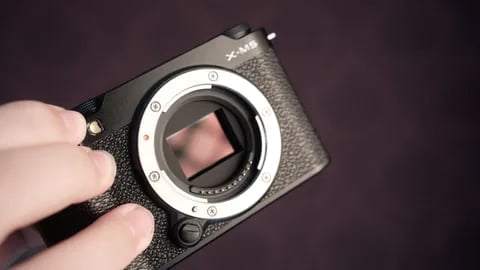
In short
The GFX Bayer CMOS Sensor is found in GFX cameras like the GFX 100 and GFX 50S. It supports many film simulations, offering unparalleled detail and dynamic range.
The GFX Bayer CMOS Sensor, introduced by Fujifilm in 2016, represents a leap into medium-format digital photography. With its 51MP and 102MP resolution variants, this sensor offers a significant increase in surface area over full-frame sensors, measuring 43.8×32.9mm. This increased size provides an expansive dynamic range and remarkable detail capture, making it particularly favoured for studio, landscape, and portrait photography. Cameras such as the GFX 100 and GFX 50S utilise this sensor, celebrated for its ability to render images with superb colour accuracy and depth. Photographers deeply appreciate the GFX sensor’s capacity to transform scenes with extraordinary tonal richness and subtlety.
The GFX generation supports a wide array of film simulations, sharing many with X-Trans bodies. This includes Classic Chrome, Classic Negative, and Eterna, among others. Recipes can be adapted across generations, but the unique characteristics of the larger sensor may lead to subtle differences in rendering. When creating or adapting recipes, consider the increased dynamic range and resolution that the GFX sensor provides.
Recipes from the GFX sensor can be adapted to X-Trans sensors, though differences in sensor size may affect rendering. Most film simulations carry over, but the unique GFX sensor characteristics can alter the final look.
The GFX sensor offers larger sensor size and higher resolution compared to other Fujifilm generations, providing superior image quality.
Film simulations
Available controls
GFX · 102 MP
First fixed-lens GFX - 102 MP medium format with a 28mm equiv. prime, in the lightest GFX body yet.
GFX · 102 MP
Compact 102 MP GFX with the new CMOS II sensor and 8-stop IBIS - flagship guts in a single-grip body.
GFX · 102 MP
Second-generation flagship GFX - 102 MP CMOS II, 8 fps burst, 8K video.
GFX · 51.4 MP
First 50 MP GFX with IBIS - the most affordable medium-format mirrorless at launch.
GFX · 102 MP
Single-grip GFX100 - same 102 MP sensor in a body close to a full-frame DSLR's size.
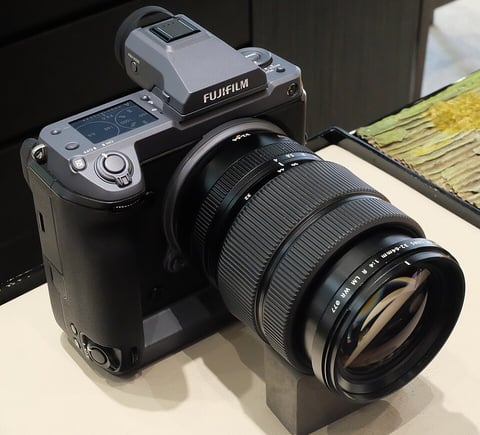
GFX · 102 MP
First 100 MP medium-format mirrorless with IBIS - integrated grip, dual EVF eyecup.
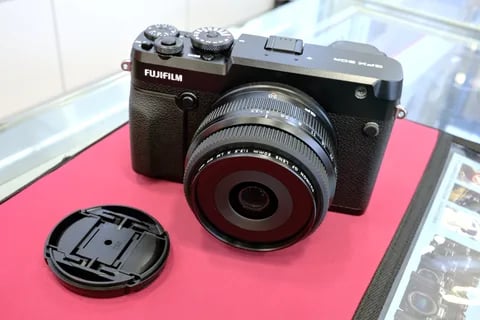
GFX · 51.4 MP
Rangefinder-style GFX - 51 MP medium format at a more accessible price and weight.
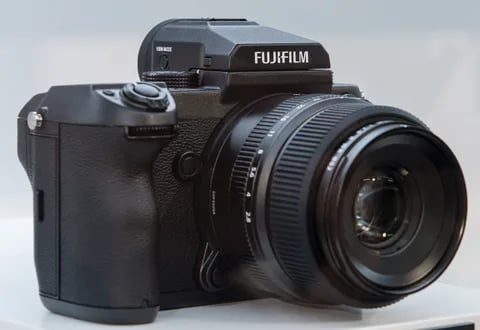
GFX · 51.4 MP
First GFX - 51 MP medium format in a body sized like a pro DSLR, launching the G-mount.

Serene contrasts with grain evoke calmness. Subtle warmth adds character to urban settings, enhancing every detail.

Tones are deep with strong grain and a slightly cool colour cast. Ideal for vibrant studio portraits.

Calm tones with subtle vibrancy that enhance skin tones, ideal for portraits.

Achieve a classic monochrome look with fine grain and a balanced contrast that enhances architectural details.

Dreamy hues and soft shadows enrich your indoor shots. Perfect for a cinematic touch with calm, moody undertones.

Low-contrast Astia film simulation with strong grain for calm, vibrant indoor portraits.

Dreamlike portraits emerge with soft highlights and moody blue hues throughout.
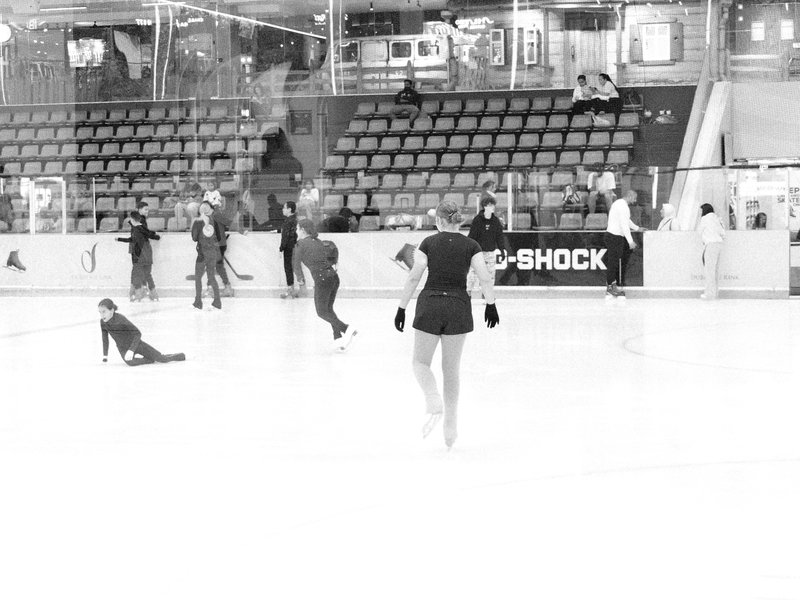
High contrast black & white with strong grain for moody scenes. Perfect for architecture and street photography.

Provia's dynamic tones transform scenes into warm and calm visuals, adding a dreamy touch to your outdoor photography.

A subtle mix of muted colours and gentle contrast, topped with soft grain. Ideal for urban street shots.

Enhance outdoor shots with vivid contrasts and lush colours. Perfect for capturing energetic landscapes.

Large grain and a nostalgic hue reminiscent of expired film. Ideal for capturing urban architecture and daily moments.
Key terms
The cameras built on the GFX sensor, the film simulations they run, and the other Fujifilm sensor generations.
Cameras on GFX